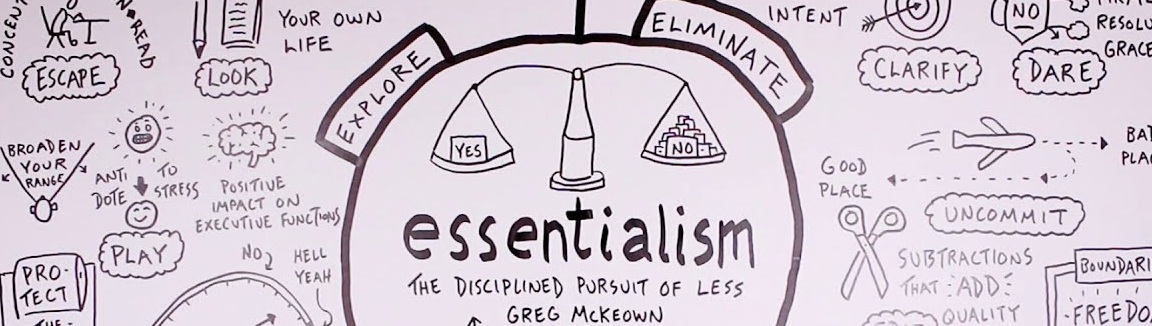
In his book Essentialism: The Disciplined Pursuit of Less, Greg McKeown describes Essentialism as the disciplined ability to identify what is truly essential and eliminate everything else, so we can make our highest contribution where it actually matters.
That idea deeply resonated with me.
For me, Essentialism and Minimalism are closely connected, but they serve different purposes. Minimalism clears physical and mental clutter. Essentialism sharpens judgment. One creates space; the other brings focus.
Essentialism is not about doing fewer things, it is about doing the right things, deliberately and consistently.
How I practice Essentialism
At every decision point, small or significant, I pause and ask one simple question: Is this essential?
If the answer is yes, I still do not act immediately. I allow a cooling-off period of a few days to reflect, reassess, and remove emotional urgency. If the answer remains yes after that pause, I proceed with conviction. If it is not essential, the decision is equally clear, and guilt-free: No.
I apply this filter everywhere:
- Before taking a loan
- Before buying a house, a car, a phone, or anything new
- Before committing to meetings, calls, or conversations
- Before responding to emails or reacting to expectations
- Before spending time, money, or emotional energy
This single question has quietly reshaped how I live and work.
Essentialism has taught me that most pressure comes not from lack of options, but from lack of clarity. When clarity improves, decisions become lighter. Boundaries become easier. And life begins to feel intentional rather than reactive.
Saying "No" is not an act of rejection. It is an act of respect, for your time, your energy, and what truly matters.
Essentialism, for me, is a daily practice of choosing depth over distraction, contribution over consumption, and purpose over impulse.